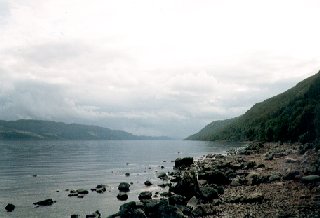
Lying 10 miles (16 km) to the southwest of Inverness, Loch Ness runs for 23 miles (37 km) SW-NE along the Great Glen from Fort Augustus. Set in a dramatic situation between steeply sloping mountains, the loch is a popular tourist attraction. It lies on the route of the Caledonian Canal, which runs from Clachnaharry to Fort William. During the construction of this canal, the level of the loch was raised by 3m (9 feet) to ease navigation.
Averaging 182m (600 feet) in depth, the maximum depth, recorded just to the southwest of Urquhart Castle, is at least 230m (754 feet). Loch Ness holds the greatest volume of water of any loch in Scotland and remarkably contains more water than in all of the lakes of England and Wales put together!
Of course, Loch Ness is most famous for its monster. St. Columba (521 - 597) is said to have subdued a mysterious 'water beast', but it was not until 1932 that a plethora of sightings began, bringing enormous tourist interest. Nessie, as the supposed monster is affectionately known, is said to be a Plesiosaur - an ancient dinosaur spared the extinction of its relatives some 65 million years ago. The existence of such an undiscovered creature seems unlikely.
English racing driver John Cobb died on the loch in 1952 while trying to break the water speed record in his jet-propelled boat Crusader while travelling at a speed in excess of 200 mph (320 km/h). A memorial was erected nearby.