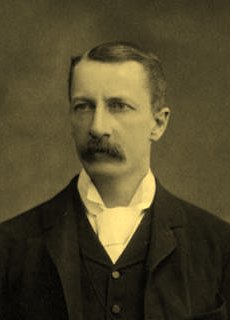
Physicist, astronomer and traveller. Born in Edinburgh, the son of Professor James David Forbes (1809-68). Forbes was educated at the Edinburgh Academy, followed by the Universities of St. Andrews and Cambridge.
In 1872, Forbes was appointed Professor of Experimental Philosophy at Anderson's College (Glasgow) and, in 1874, led the British party to observe the Transit of Venus from Hawaii. He went on to predict the existence of the planet Pluto in 1880, some fifty years before it was actually discovered.
Forbes returned from Hawaii via a great journey through Asia. He was able to report as a war correspondent for The Times newspaper during the Russo-Turkish War of 1877 and was honoured by the Russians for his efforts. He moved to London in 1880 and devoted himself to electrical engineering projects, including the electrification of the London Underground. He invented the carbon brush, almost universally used on subsequent electric motors and generators. In collaboration with James 'Paraffin' Young (1811-83), Forbes undertook experiments across the Firth of Clyde to better determine the speed of light (1881). He advised on hydro-electric power generation around the world, including a scheme at Niagara Falls. He also proposed schemes for Scotland. He went on to research in military engineering, including range-finding and signalling techniques.
In 1906, Forbes built a house hear Pitlochry, which included an observatory and an extensive library. He received an honorary degree from St. Andrews and Strathclyde University named a student hall in his honour in 1987.
He died in Worthing (Sussex).